
What is the best GPU for video rendering in 2026? Industry consensus points to the NVIDIA L40S. Built on the Ada Lovelace architecture, it features 48GB of ECC memory, third-generation RT cores for real-time ray tracing, and three dedicated AV1 media engines. Unlike consumer cards (RTX 4090) that lack server stability, or AI-only cards (A100/H100) that lack display engines, the L40S is the ultimate hybrid accelerator for rendering massive 8K video timelines, complex 3D scenes in NVIDIA Omniverse, and generative AI video workloads.
If you are managing a media production pipeline in 2026, the technological landscape is more demanding than ever. Raw 8K footage is the baseline, 3D environments in Unreal Engine 5 and Blender are incredibly dense, and AI-driven video generation (text-to-video, AI frame generation, and neural upscaling) is now an everyday requirement.
Studios are quickly realizing that legacy hardware is creating massive bottlenecks. You can't rely on consumer-grade gaming GPUs for enterprise-level server farms, and pure compute GPUs are heavily optimized for LLMs (Large Language Models) rather than pixel-pushing graphics.
This is exactly where the NVIDIA L40S shines. Hosted on high-performance infrastructure like our dedicated GPU servers, the L40S has solidified its position as the apex predator of video rendering and creative workloads this year. Here is a deep dive into why.
1. The Power of the Ada Lovelace Architecture
At the heart of the L40S is NVIDIA’s hyper-efficient Ada Lovelace architecture. While older server cards like the Ampere-based A40 or A100 did the heavy lifting for years, the L40S represents a generational leap in sheer processing power.
The GPU boasts a staggering 18,176 CUDA Cores. In video rendering applications like Adobe Premiere Pro, DaVinci Resolve, and Maya, CUDA core count directly correlates to how fast complex effects, color grades, and particle simulations are calculated. The L40S churns through compute-heavy timelines faster than almost any other GPU on the market, dramatically reducing timeline stutter and final export times.
2. 48GB of ECC VRAM: The Cure for "Out of Memory" Errors
Any 3D artist or VFX supervisor will tell you that VRAM (Video RAM) is the most critical bottleneck in modern rendering. If a scene's textures, geometry, and lighting calculations exceed your GPU's memory, the system will either crash or revert to painfully slow system RAM.
The L40S is equipped with a massive 48GB of GDDR6 memory. This allows you to:
Load massive, uncompressed 8K and 12K video files directly into memory.
Render photorealistic, multi-million polygon scenes in V-Ray, Redshift, or OctaneRender without stripping down assets.
Run complex AI video diffusion models locally.
Furthermore, this is ECC (Error Correction Code) memory. When rendering a 48-hour long sequence, a single flipped bit from cosmic radiation or electrical interference can corrupt an entire frame, forcing a restart. ECC memory detects and fixes these errors in real-time, ensuring rock-solid stability for 24/7 server environments.
3. Revolutionary Ray Tracing and AI Capabilities
Modern rendering isn't just about rasterization; it is a hybrid of ray tracing and artificial intelligence.
142 Third-Generation RT Cores: These deliver 212 TFLOPS of ray-tracing performance. For architectural visualization, virtual production, and 3D animation, the L40S calculates physical light bounces, shadows, and reflections at unprecedented speeds.
568 Fourth-Generation Tensor Cores: AI is now heavily integrated into video editing (e.g., automated rotoscoping, voice isolation, generative fill, and DLSS 3 frame generation). The L40S delivers 733 TFLOPS of FP8 AI compute, allowing your server to seamlessly handle AI inference alongside traditional rendering.
4. Triple Media Engines with AV1 Encoding
This is arguably the most important feature for pure video workflows. Unlike pure AI accelerators (like the H100) which do not have hardware encoders, the L40S is built for media.
It features three NVENC (encoders) and three NVDEC (decoders), all natively supporting the AV1 codec. AV1 is the undisputed standard in 2026, offering superior video quality at massively reduced file sizes compared to H.264 or H.265. Because the L40S has three engines running in parallel, you can transcode multiple video streams simultaneously, ingest multi-camera footage for virtual productions in real-time, or batch-export projects in record time.
Enterprise Server GPU Comparison (2026)
To understand why the L40S is the top recommendation for Leo Servers clients, let's look at how it stacks up against the competition for video specifically.
| GPU Model | Best Use Case | VRAM | Media Engines (NVENC) | Server Reliability (24/7) |
|---|---|---|---|---|
| NVIDIA L40S | Video Rendering, 3D, AI Graphics | 48GB ECC | 3 (AV1 Support) | Yes (Passive cooling) |
| NVIDIA RTX 4090 | Solo Creators / Gaming / Home PCs | 24GB Non-ECC | 2 (AV1 Support) | No (Active cooling, limits density) |
| NVIDIA H100 | Large Language Models (LLMs) | 80GB+ ECC | 0 (No display engines) | Yes |
| NVIDIA A40 | Previous Gen Rendering | 48GB ECC | 1 (No AV1) | Yes |
The verdict is clear: The RTX 4090 lacks the server stability and VRAM for massive enterprise jobs, while the H100 lacks the media engines to output video. The L40S is the perfect intersection.
Why Host Your L40S Infrastructure with Leo Servers?
Having the world's most capable rendering GPU is useless if it is bottlenecked by a poor network, thermal throttling, or high latency. Enterprise rendering requires enterprise infrastructure.
At Leo Servers, we specialize in high-performance computing and robust GPU-accelerated servers optimized for the media and entertainment industry.
Massive Bandwidth: Video rendering means moving terabytes of data daily. Leo Servers offers unmetered, high-speed network uplinks so you can upload raw assets and download massive ProRes exports without agonizing wait times.
Enterprise-Grade Uptime: Our data centers provide redundant power and advanced cooling. The L40S thrives in our high-density racks, meaning your multi-day render farms will never fail due to infrastructure drops.
Scalable Render Farms: Need one L40S node for a quick project, or a cluster of 8x L40S servers for a feature-length film? Leo Servers allows you to scale your hardware exactly when your production schedule demands it.
Frequently Asked Questions (FAQ)
Can I use the NVIDIA L40S for AI video generation?Yes. The L40S is an incredible dual-purpose GPU. Thanks to its 4th-gen Tensor cores and massive 48GB of memory, it excels at running complex generative AI models (like text-to-video, Sora alternatives, and Stable Video Diffusion) locally and securely.
Why shouldn't I just use a server full of RTX 4090s?Consumer GPUs like the RTX 4090 use active cooling (fans) and draw massive power, making them highly prone to overheating in tight server racks. Furthermore, NVIDIA's EULA restricts the use of GeForce cards in data centers. The L40S uses passive server cooling, features error-correcting VRAM, and is legally compliant for data center deployment.
Does the L40S support NVIDIA Omniverse?Absolutely. The L40S is heavily optimized for NVIDIA Omniverse Enterprise. Its massive RT core count makes it the ideal backbone for collaborative 3D workflows, digital twins, and virtual production environments.
How many NVENC engines does the L40S have?The L40S has three independent NVENC (encoder) and three NVDEC (decoder) hardware engines. All six engines support AV1, HEVC (H.265), and H.264 codecs. This triple-engine configuration allows simultaneous multi-stream 4K and 8K encoding, and with Split-Frame Encoding enabled, real-time 8K AV1 transcoding becomes achievable.
How does the L40S compare to the H100 for video rendering?For video rendering specifically, the L40S is superior to the H100. The H100 has no dedicated RT Cores and no NVENC/NVDEC engines — it cannot hardware-encode video at all. The L40S has 142 RT Cores for ray tracing, three NVENC engines for AV1/HEVC/H.264 hardware encoding, and DLSS 3 support. For rendering + transcoding workloads, the L40S also costs 50–70% less per hour than the H100.
Ready to Eliminate Render Wait Times?
Your creative team’s time is too valuable to be spent waiting on progress bars. Upgrade your pipeline with the definitive hardware champion of 2026.
Explore the full specs and configure your custom NVIDIA L40S bare-metal instance on our dedicated GPU servers today!
Recent Topics for you

DDoS Protection for Gaming Servers: Layer 7 Security Guide
Learn how to protect dedicated gaming servers from Layer 7 DDoS attacks with network mitigation, rate limiting, firewalls, server hardening, and monitoring.

PCIe Gen 6 & CXL 3.1: Revolutionizing Server Architectures
Discover how PCIe Gen 6 and CXL 3.1 are breaking the memory wall. Explore composable infrastructure, tiered memory, and high bandwidth server architectures.

Why Your WooCommerce Store Needs a Dedicated Server
Is slow hosting killing WooCommerce conversions? Discover why a dedicated server offers the speed and uptime your store needs.

Why Liquid Cooling Is Mandatory for High-End Dedicated Server Racks
Discover why air cooling has hit its thermodynamic limit at 41.3 kW and how direct-to-chip liquid cooling and immersion cooling power modern AI data centers.

How to Choose the Right Dedicated Server Configuration
Picking a dedicated server is not a one-size-fits-all decision. Learn exactly which specs to prioritise, from CPU and RAM to bandwidth and location.

Why a USA Dedicated Server Is the Best Choice for Global Businesses
Discover why hosting your infrastructure on a USA dedicated server provides an unmatched competitive advantage, from tier 1 global peering to strategic locations across America.

Why a Dedicated Server in Germany Is Perfect for European Businesses
Discover why hosting your infrastructure on a German dedicated server provides an unmatched competitive advantage, from DE-CIX routing to strict GDPR and BDSG compliance.

Unmetered Bandwidth Dedicated Servers: Why Gamers & Streamers Need Them
Discover why unmetered bandwidth dedicated servers are essential for gaming and live streaming. Learn how bare-metal infrastructure prevents lag, throttling, and data overage fees.
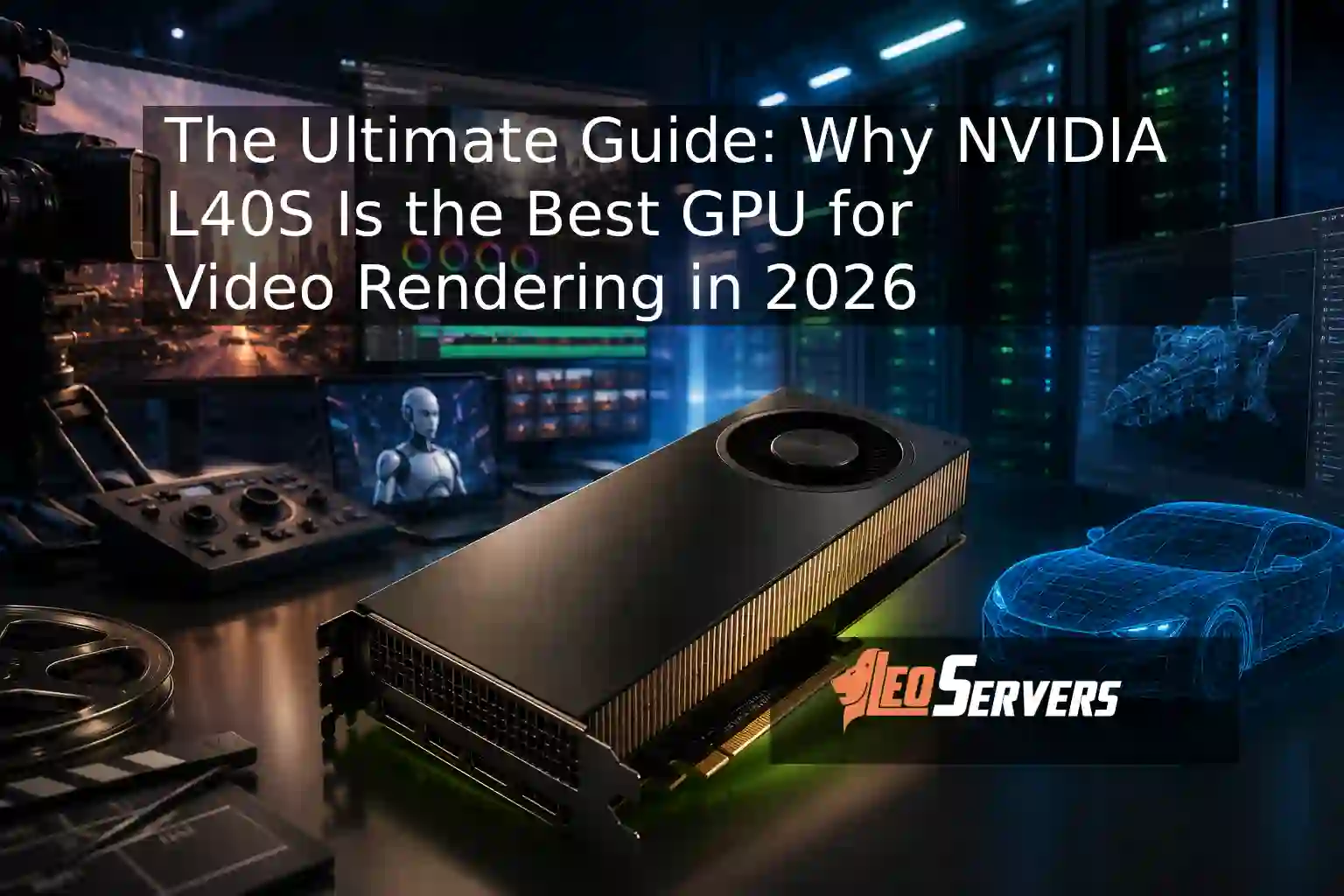
The Ultimate Guide: Why NVIDIA L40S GPU Is the Best GPU for Video Rendering in 2026
Looking for the best GPU for video rendering in 2026? Learn why the NVIDIA L40S dominates 3D animation, VFX, and AI video workflows, and how Leo Servers can power your pipeline.

Best Dedicated Server Locations for Game Hosting in 2026
Discover the best dedicated server locations for game hosting worldwide. Leo Servers breaks down which regions deliver the lowest ping, highest uptime, and the best gaming experience for players across every continent.

Top 10 Open-Source AI Models for Dedicated GPU Servers
Discover the top 10 open-source AI models for 2026 and the dedicated GPU servers required to host them. Reduce API costs and ensure data privacy.

What Is an Unmetered Dedicated Server & Who Should Use One?
Discover what an unmetered dedicated server is, how it works, and whether your business needs one. Leo Servers explains port speeds, bandwidth, and who benefits most.

The Infrastructure Behind AI: Why LLMs Require Bare Metal GPUs
Discover why bare metal GPU servers are critical for running Large Language Models, conquering VRAM constraints, and maximizing inference throughput.
AMD EPYC 9355P: The Powerhouse Dedicated Server You Need
Discover why the AMD EPYC 9355P 'Turin' Zen 5 processor is the ultimate choice for dedicated servers needing 32 cores and massive L3 cache.

Why Singapore Dedicated Servers Are in High Demand in 2026
Explore why Singapore dedicated servers are in high demand in 2026 for gaming and enterprise workloads needing ultra-low APAC latency.
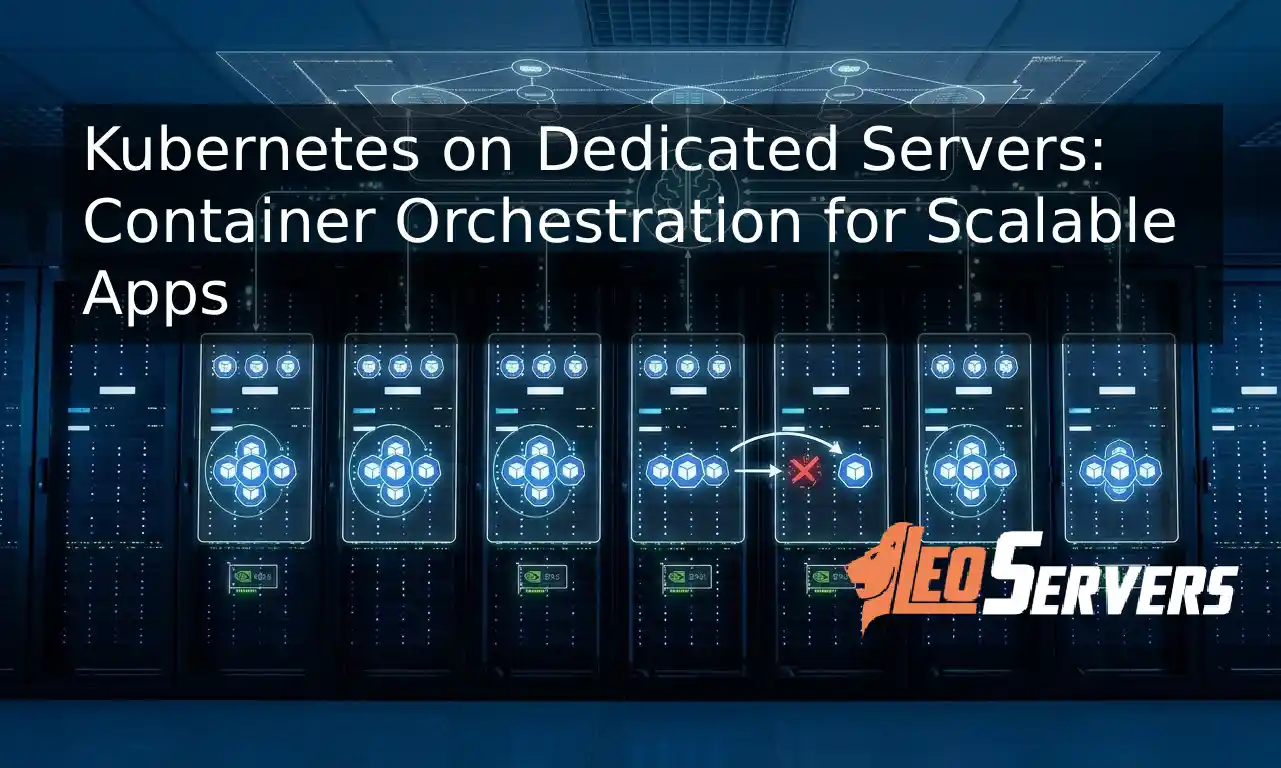
Kubernetes on Dedicated Servers: Container Orchestration for Scalable Apps
Discover why running Kubernetes on dedicated bare metal servers offers the ultimate container orchestration for scalable apps without cloud virtualization overhead.

AIOps: The Future of AI-Powered Server Management
Discover how AIOps is reinventing server management with predictive maintenance, automated optimization, and self-healing infrastructure. Learn more at Leo Servers.

Top 5 Locations For Dedicated Server Hosting in 2026
Choosing the right dedicated server location is critical for speed and compliance. Explore the top 5 global hosting locations for 2026, including the USA, Germany, and Singapore.
![5 Top Dedicated GPU Server Providers [2026]](/assets/images/blog/top-5-gpuproviders.webp)
5 Top Dedicated GPU Server Providers [2026]
A dedicated GPU server delivers consistent, predictable performance for AI and rendering. We examine leading providers including Leo Servers, OVHcloud, and Hetzner.

Why a Dedicated Server in Mumbai is the Key to High-Performance & Low Latency Hosting
Migrating to a Dedicated Server in Mumbai offers the robust backbone required for modern applications. Discover why local infrastructure is the key to conquering latency.

15 Best Games with Bare Metal Dedicated Servers: The Pro-Gamer’s Choice for 2026
True performance enthusiasts know that Bare Metal Dedicated Servers are the only way to achieve zero-latency. Explore the top 15 titles demanding dedicated hardware in 2026.
Is the GeForce RTX 5090 Good for Gaming? User Reviews 2026
Thinking about upgrading your rig or server infrastructure in 2026? The NVIDIA GeForce RTX 5090 has officially cemented itself as the titan of the Blackwell generation.

5 Best GPU Server Providers for AI Training in 2026
Discover why Russia Dedicated Servers are the low-latency solution for conquering the CIS market.

Why Russia Dedicated Servers Are Your Secret Weapon for CIS & Asian Markets
Discover why Russia Dedicated Servers are the low-latency solution for conquering the CIS market.

Why Your Business Needs a Dedicated Server in Brazil
Localized Hosting for Global Reach: Conquer the Latin American Market

Why France is the Ultimate Destination for Dedicated Servers
Lightning-Fast, Secure, and Scalable Dedicated Servers for Global Business. Key Advantages for Businesses Worldwide.

Why a Japan Dedicated Server is Your Business's Next Strategic Move
Discover the key advantages of a Japan dedicated server. From low-latency access to the entire Asia-Pacific market to high-performance GPU capabilities, see why Japan is the strategic choice for your infrastructure.

Blog Post Title: The APAC Advantage: Why Your Next Australia Dedicated Server Should Be with Leo Servers
Discover the strategic advantages of Australia dedicated servers for APAC markets. Lightning-fast latency, robust security, and enterprise-grade infrastructure with Leo Servers.

Boost Website Speed & Fix Memory Errors: How to Increase PHP Memory Limit in WHM
Fix 'Allowed memory size exhausted' errors and speed up your websites on Leo Servers by increasing the PHP memory limit in WHM. Learn step-by-step with expert tips.
1