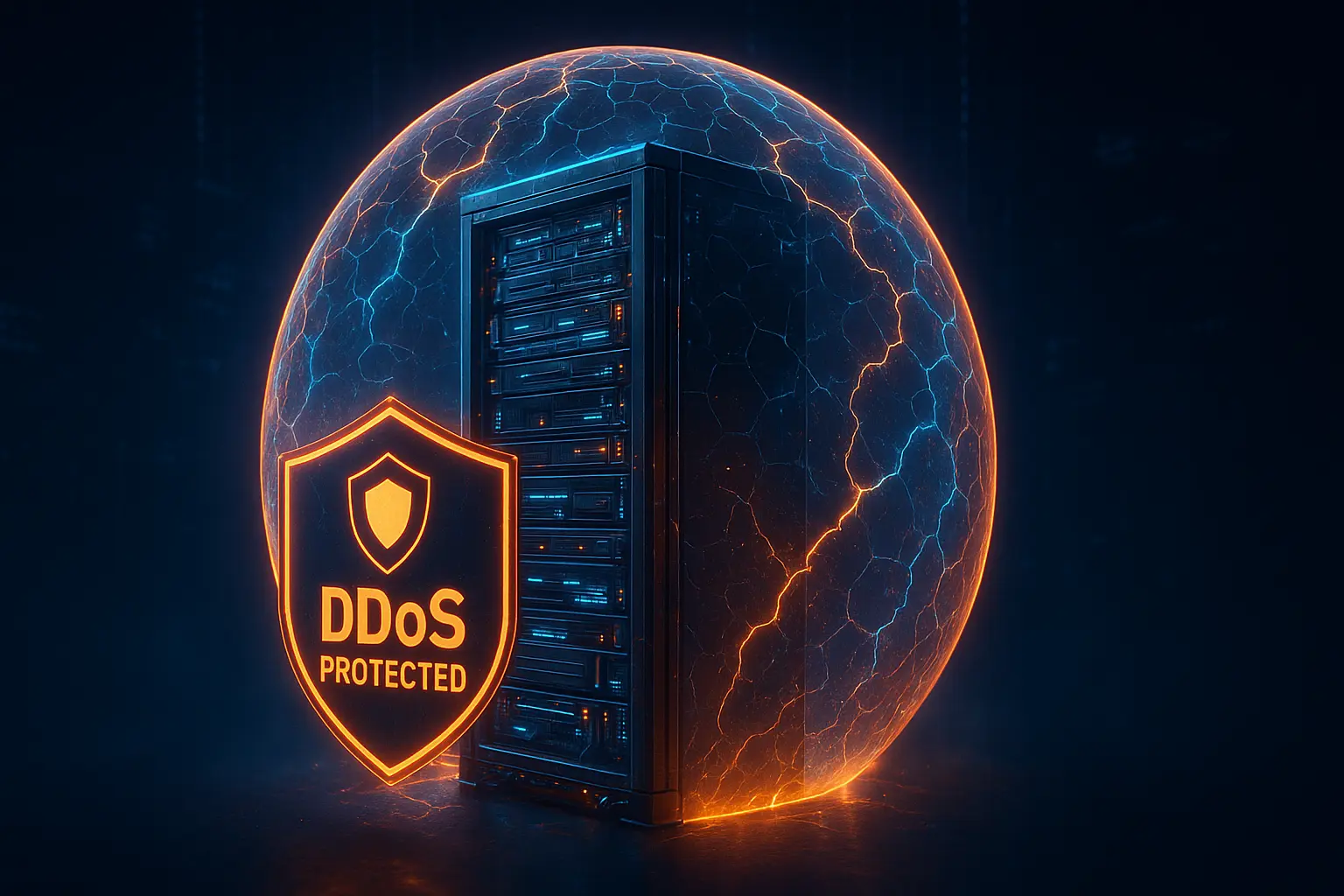
Premium Hosting DDoS Protected Dedicated Servers
Enterprise-grade infrastructure with Enterprise-grade protection. Deploy in seconds, scale instantly, and stay protected 24/7.
In today’s digital landscape, Distributed Denial of Service (DDoS) attacks are no longer a matter of "if," but "when." For businesses and creators who rely on consistent online availability, these attacks are a critical threat. A successful DDoS attack floods your server with malicious traffic, crippling your online operations, causing significant financial losses, and instantly eroding the reputation you have worked hard to build.
At Leo Servers, our experience managing high-performance infrastructure has shown us firsthand how devastating unprotected downtime can be. Imagine your e-commerce website crashing during a crucial product launch, or your game server disconnecting hundreds of players during peak hours. The resulting downtime translates directly to lost revenue and frustrated users.
Investing in DDoS protection is an essential, proactive step. Waiting for a costly attack to disrupt your availability is a risk no modern enterprise can afford. By securing your infrastructure in advance, you ensure business continuity, safeguard customer data, and maintain absolute trust.
While any public-facing server can be a target, certain operations face much higher risks:
When you host with Leo Servers, you are backed by a resilient, globally distributed network designed to absorb massive traffic spikes and reroute malicious data instantly. We combine our deep industry expertise with cutting-edge mitigation technology to ensure that only legitimate, clean traffic reaches your server. We believe in complete transparency and control. You maintain full root access to your machine, while our automated systems work in the background to neutralize threats in real-time.
Our mitigation systems activate instantly, ensuring absolutely no downtime during an active attack.
Protection is built directly into our pricing model. You will experience zero overages and zero extra charges, even if targeted by a massive attack.
We back our infrastructure with a firm Service Level Agreement, guaranteeing the reliable connectivity your business demands.
We utilize advanced algorithms and machine learning to specifically identify and drop malicious packets before they ever touch your hardware.
Application-specific filtering for major protocols, including Minecraft, FiveM, Rust, ARK, Counter-Strike, and TeamSpeak.
Ensures uninterrupted uptime, protecting shopping carts and secure payment gateways to safeguard your sales pipeline.
Maintains highly stable, high-bandwidth connections specifically configured to prevent jitter, lag, or dropped communications.
Safeguards resource-intensive tasks (HPC) from external disruption, keeping your data secure, processed, and perfectly accessible.
DDoS (Distributed Denial of Service) protection is a set of security protocols and network infrastructure designed to mitigate the impact of malicious traffic flooding. It works by analyzing incoming data, filtering out the "bad" traffic generated by the attack, and allowing "good" (legitimate) customer traffic to pass through to your server seamlessly.
A standard, unmanaged server without dedicated hardware-level protection cannot defend itself against a large-scale DDoS attack. The sheer volume of traffic will easily overwhelm the server's network interface or consume all its CPU/RAM resources. Effective protection requires an upstream network infrastructure—like the global mitigation network provided by Leo Servers—to absorb and filter the attack before it reaches the server.
A DDoS-protected IP address is an IP routed through a secure scrubbing center. When traffic is sent to this IP, it is continuously monitored by intelligent algorithms. If an attack is detected, the scrubbing center filters the malicious packets, ensuring that the final destination server behind that IP remains online and fully operational.
Yes. Launching a DDoS attack is a serious cybercrime in most jurisdictions around the world. In the United States, for example, it violates the Computer Fraud and Abuse Act (CFAA) and can result in severe penalties, including heavy fines and significant prison sentences.